

If you’re responsible for a mature line-of-business (LOB) desktop application—WinForms, WPF, VB6, Delphi, or a large custom-built system—then you already know a difficult truth:
This is not because your team lacks skill. It’s because large LOB apps are architecturally incompatible with the stateless, component-fragmented nature of traditional web frameworks, which remain tied to an outdated HTML/CSS/JavaScript foundation best suited for storefront-style websites.
Wisej.NET was created specifically to solve this problem at its core.
Below, we’ll explore the five biggest modernization pitfalls, how Wisej.NET eliminates each one, and why organizations worldwide are choosing it as the practical path to modern web transformation.
Your existing LOB system represents 10–20+ years of domain expertise:
Validation rules
UI workflows
Event-driven logic
Data binding
Custom business processes
Rewriting in HTML/JS forces teams to:
Recreate workflows manually
Rebuild or reinterpret business logic
Re-architect a completely different programming model
Extract and duplicate logic across layers
This inevitably causes:
Major regressions
Missing features
Incomplete parity
Budget overruns
Team burnout
Multi-year delays
Wisej.NET keeps your application’s real .NET components on the server while rendering fully modern JavaScript widgets in the browser.
You keep:
Your business logic
Your object model
Your event-driven architecture
You gain:
A modern web UI
A robust client-side widget framework
Zero duplication of logic
Zero rewrite
Zero functional regression
You modernize without erasing 20 years of hard-won knowledge.
Desktop applications rely on:
Persistent state
Multi-step workflows
Complex UI trees
User-driven event cycles
Long-running operations
React, Angular, and Blazor cannot naturally support this. So teams end up building:
State machines
Redux stores
Custom UI synchronizations
Complex event flows
Endless glue logic
This is why “simple” modernization quickly becomes unmanageable.
Wisej.NET uses:
Server-side state
Differential JSON updates
Real-time WebSocket communication
Intelligent client-side widgets
Refreshing the browser does not lose anything. State is preserved, consistent, and correct. You get the web’s accessibility with the desktop app’s reliability.
LOB applications depend on rich UI elements such as:
Hierarchical grids
Docking panels
Ribbon bars
Multi-level navigation
Tabbed MDI
Masked inputs
Complex dialogs and editors
Trying to recreate this using:
Angular Material
Bootstrap
Tailwind
Third-party JS libraries
… inevitably leads to:
Inconsistent APIs
Incompatible components
Endless CSS battles
A Frankenstein UI
High maintenance cost
Wisej.NET comes with:
WinForms-equivalent controls
WPF-inspired modern controls
Dozens of advanced web widgets
Unified theming
Advanced layout systems
High-performance grids
Pixel-perfect design-time integration
Everything works together, behaves consistently and is designed for enterprise complexity.
Vendors often promise automated modernization by:
Scanning your forms
Producing a mountain of generated Angular or React code
Dumping your logic into TypeScript fragments
Producing unreadable HTML/CSS
The results:
Bloated codebases
Inconsistent patterns
No round-tripping capabilities
Business logic scattered in generated files
Impossible maintenance
Higher long-term cost than a full rewrite
This doesn’t modernize anything. It multiplies technical debt.
Wisej.NET does not generate front-end code. Your .NET code runs on the server. The browser receives only runtime differential JSON instructions. This keeps the codebase clean, maintainable, and future-proof.
LOB systems push massive amounts of data and dynamic UI updates. Browsers struggle with:
Large grids
Real-time updates
Heavy DOM changes
Thousands of components
Multiple concurrent users
React, Angular, and Blazor simply weren’t built for desktop-grade interactivity.
Wisej.NET delivers:
Secure persistent WebSocket channels
High-performance JS widgets
Background tasks with push updates
Intelligent partial UI refreshes
Smooth real-time interaction
Fast large-data rendering
Users get desktop-level responsiveness in the browser.
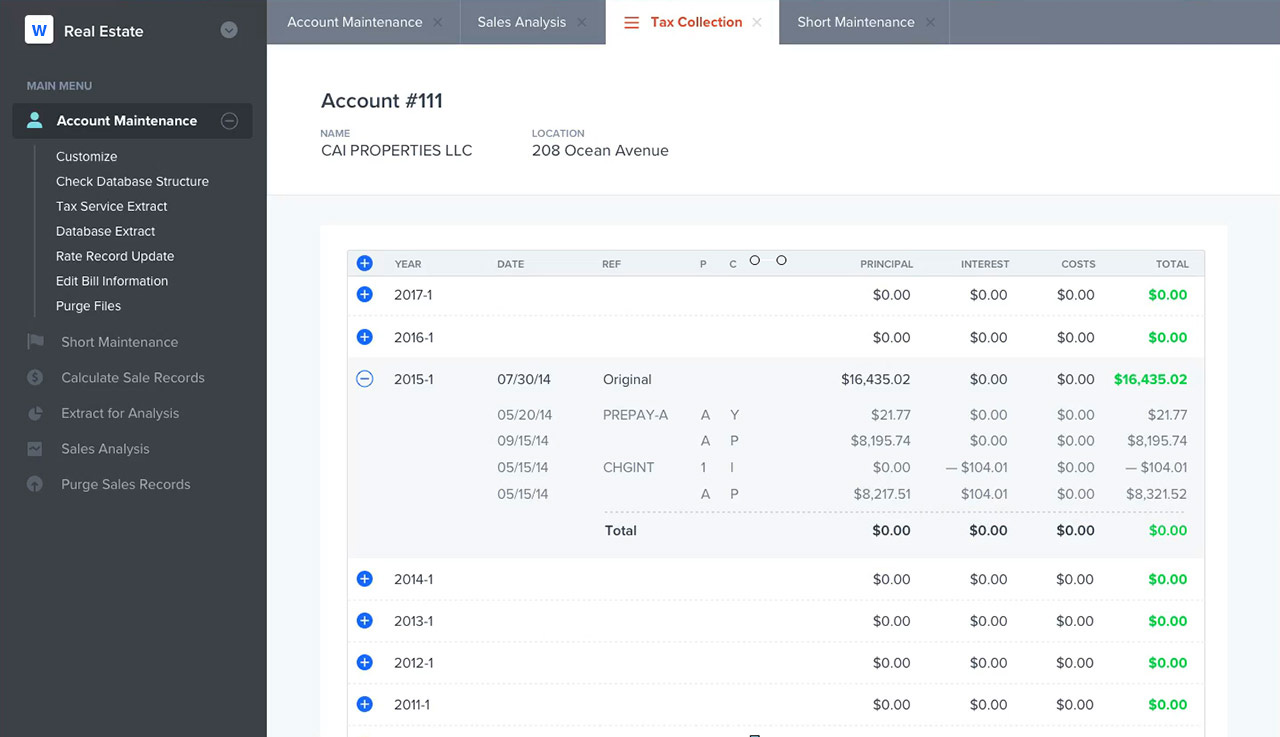
Many modernization efforts fail because the resulting UI still “looks legacy.” Even after expensive rewrites, the screens feel dated or inconsistent.
Wisej.NET solves this by providing a next-generation theme system that delivers a truly modern UI instantly — without rewriting forms.
Fluent-style modern interfaces
Material-inspired designs
Dark mode and accessibility variants
Modern spacing, typography, and shadows
Brand-aligned corporate themes
Dynamic theme switching
Smooth animations
This is not skinning. This is a real, modern design layer applied to your existing screens. A legacy WinForms form rendered through Wisej.NET looks like a 2026 cloud-native SaaS application, not a port.
Developers can:
Apply themes globally
Customize them at a corporate level
Tailor branding
Add new modern controls
Achieve UI consistency impossible with raw HTML/JS/CSS
The result:
Your application does not just run on the web — it looks like it was built for the web. Right now.
This is the benefit decision-makers often underestimate:
Modern web stacks force teams to manually construct the UI:
Writing markup
Hand-adjusting CSS
Manually defining layouts
Fighting responsive behavior
Editing multiple files per component
This kills productivity.
After modernization, developers can:
Drag and drop controls visually
Use anchoring, docking, and layout panels
Preview real UI behavior in Visual Studio
Quickly build complex screens
Maintain pixel-perfect alignment
Avoid CSS entirely
Move faster than they ever could in the modern web ecosystem
New features ship faster
No markup. No CSS. No JS. Just .NET and the designer.
Maintenance stays cheap and predictable
Your team can update screens visually, ensuring long-term maintainability.
The modernization doesn’t just save the application — it rejuvenates the development workflow for the next decade.
The future of enterprise modernization is not rewriting everything in JavaScript frameworks. It is not generating mountains of Angular code. It is not hoping a stateless environment can mimic a stateful desktop application.
The future is Wisej.NET:
A modern web UI
A stateful architecture
An enterprise-grade widget framework
Zero rewrite of business logic
Real-time performance
A familiar Visual Studio designer
Modern themes
AI-accelerated development workflows
For organizations with serious, mission-critical desktop systems, Wisej.NET is the only proven approach that delivers modernization quickly, reliably, and beautifully.